

Discover the Advantages of Using a Precision control Valve in Your System
- 2026-05-18 14:06:16
- admin
- NO COMMENTS
During commissioning of a gas blending skid, engineers often notice the same two warning signs before the control loop officially “fails.” The first is a pressure trace that will not settle at low demand. The second is subtler: a regulating valve that seems to hold setpoint during steady flow, but starts drifting as soon as one branch opens and another closes. In many field operations, that is not a software issue at all. It is the valve telling you that its resolution, droop behavior, or sensing element is no longer suited to the actual process window. ControlAir notes that when flow rises, outlet pressure in a conventional regulator can drop sharply, and downstream devices become vulnerable to supply fluctuations if the unit is not sized or designed well enough for the real duty.
For engineers working on site, the damage pattern usually develops in a clear chain. Supply pressure fluctuation leads to pilot overcorrection, the plug starts hunting, trim surfaces experience repeated micro-movement, and over time the valve settles more slowly than the loop demands. A second chain is just as common: repeated temperature cycling or the wrong elastomer choice hardens the diaphragm, a micro-leak forms, and that small leak turns into wasted gas, unstable pressure, and unnecessary compressor or pump loading. Precision regulating valves are designed to break those chains early, which is exactly why buyers in instrumentation, gas pressure regulation, and fine liquid dosing keep moving away from general-purpose regulators toward higher-resolution control hardware.
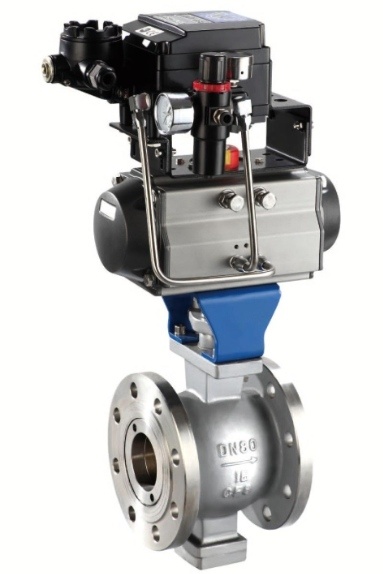
Overview of Precision Regulating Valves
What is a Precision Regulating Valve?
A precision regulating valve is not simply a smaller pressure reducer. In practical plant terms, it is a control element built to maintain a target pressure or flow with tighter sensitivity, better repeatability, and lower droop than a general-purpose valve. ControlAir’s technical paper breaks precision performance into four things engineers actually care about during tuning: sensitivity, repeatability, resolution, and droop. SMC similarly positions precision regulators for pressure-fed fluids, pilot supply, and test or inspection service where fine adjustment matters. That distinction matters because many purchasing errors start when a buyer selects by port size alone instead of by control quality.
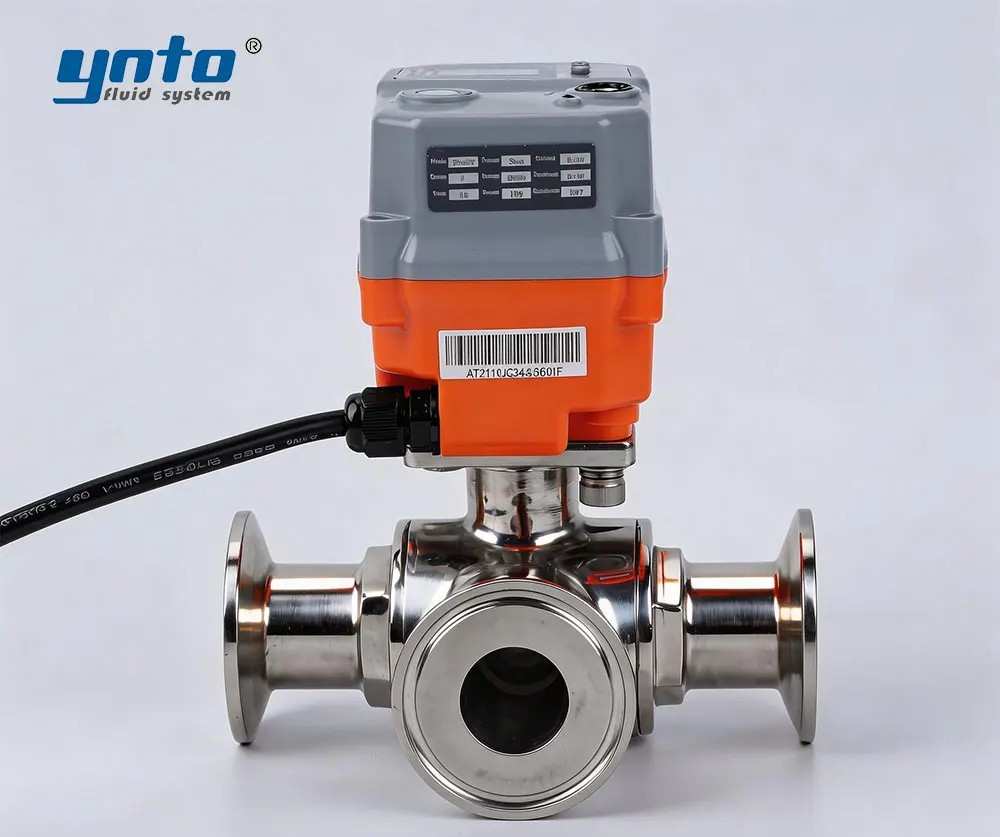
If your process needs electronic positioning rather than spring-only self-regulation, a packaged electric control valve is often the fastest route to stable automation. For tighter low-leakage service under modest differential pressure, cnynto’s electric single seat control valve is built around 4–20 mA input control and is specified for small leakage performance across a wide temperature range, which fits many utility, chemical, and light process loops.
How it Works
A good precision regulator works by keeping the sensing side honest. In a conventional spring-loaded device, outlet pressure pushes against the spring and trim position changes mechanically. In a higher-precision design, the mechanism may use a pilot stage, balanced control geometry, or a measuring capsule to reduce hysteresis and improve response. Omega’s PRG200 series, for example, uses a stainless steel measuring capsule and a pilot-controlled servo-balanced mechanism to improve accuracy and repeatability, while Equilibar’s flow control approach works in a PID loop with a flow meter and an electronic pressure controller for high-resolution regulation.
That is why unstable low-flow loops behave differently once the valve technology changes. General-purpose regulators often need a larger downstream pressure change before they react; ControlAir describes typical precision regulators as responding to much smaller pressure changes than general-purpose units. In commissioning language, that means less overshoot, less hunting, and fewer operator corrections.
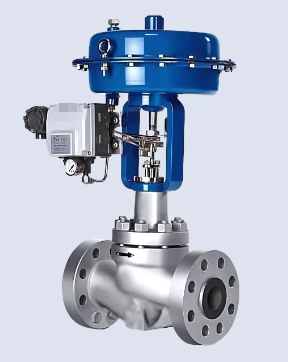
Advantages in Process Control Instrumentation
Enhanced Accuracy and Stability
In process control instrumentation, accuracy on paper is less important than stability under disturbance. A pressure header can look perfect with one consumer running, then drift badly when a second line opens. ControlAir points out that droop is the deviation from setpoint as flow increases, and poor droop performance is exactly what technicians see when output pressure falls away under changing demand. Precision regulators are built to reduce that effect. Omega also states that its high-precision regulator maintains stable output across the full flow range with accuracy to ±0.1%.
This is where valve construction starts to matter. If the media is clean dry air or inert gas, compact precision regulators in aluminum or brass may be enough. If the system handles wet gas, corrosive chemicals, or aggressive cleaning cycles, 316L stainless steel and PTFE sealing become the safer choice. For chloride-rich or highly corrosive service, Swagelok notes that Alloy 2507 Super Duplex offers strong resistance to pitting, crevice corrosion, and stress corrosion cracking while supporting higher pressure ratings. In other words, corrosive media plus the wrong metallurgy leads to localized attack, then seat damage, then flow drift. That failure path is slow, but very expensive.
Reduced Operational Costs
A precision regulating valve usually pays for itself in places where operators are constantly compensating for a mediocre regulator. Lower droop means less wasted compressed air or process gas. Better repeatability means fewer off-spec batches. Smaller pressure swings also reduce wear on controllers, pumps, cylinders, and downstream analyzers. Emerson’s valve condition monitoring literature adds another operational angle: when developing valve problems are identified early, plants can act before failure and avoid unplanned downtime.
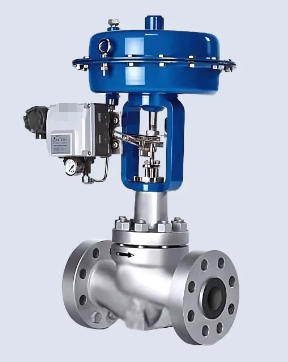
For buyers comparing industrial valve solutions, this is also where product selection should become more application-specific. A pneumatic sleeve control valve is a strong choice when the loop sees higher pressure drop and you need stable guidance, low vibration, and minimal noise. A self-operated pressure control valve makes more sense when you want pressure regulation in gas, liquid, or steam service without adding an external power source. Both options address cost, but in different ways: one reduces instrumentation burden, the other improves loop behavior under more demanding dynamics.
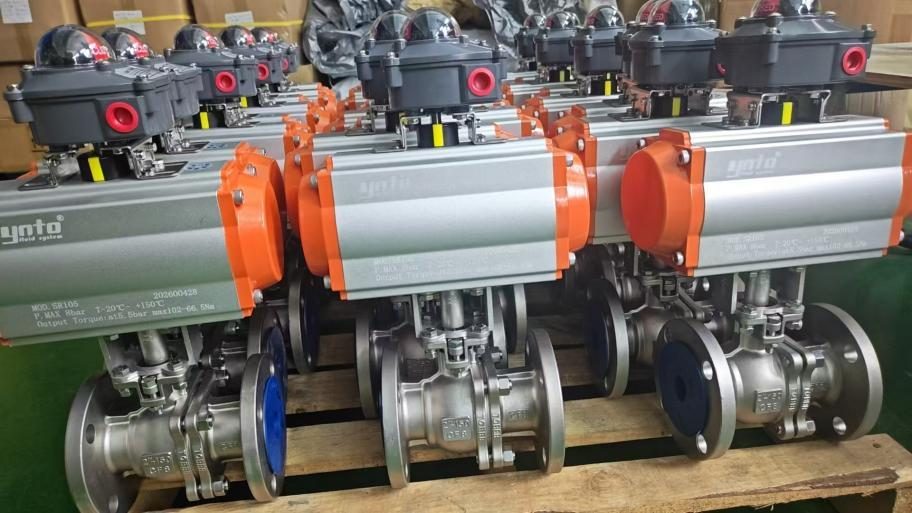
Evaluating Different Types of Regulating Valves
Comparison of Electronic Flow Control Valves vs Hydraulic Flow Regulators
An electronic flow control valve is the better fit when the setpoint changes often and the control system needs to coordinate with transmitters, PLC logic, or recipe management. Equilibar explains that its flow control valve works with an electronic controller, pressure pilot, and flow meter in a PID loop, which makes it suitable for demanding applications across gases, liquids, and multiphase media. Festo’s proportional valves follow a similar logic in pneumatics: analog or current signals are translated into proportional flow or pressure changes, with some models offering integrated sensors and digitalized data transmission.
A hydraulic flow regulator is different. Bosch Rexroth describes pressure-compensated flow regulators as devices that meter a constant regulated flow irrespective of downstream pressure changes, while some 2-way versions maintain flow largely independent of pressure and temperature. In plain engineering terms, that makes hydraulic regulators ideal when actuator speed must remain steady even while load changes. But they are not automatically the best answer for highly variable, recipe-driven process control. If a buyer is searching for the “best modulating control valve for precise flow regulation 2025,” the real question is simpler: do you need continuous electronic adjustment, or do you need a rugged constant-flow hydraulic function?
When to Use Each Type
Use an electronic flow control valve when you need tight interaction with process control instrumentation, remote setpoint changes, data visibility, or fine gas pressure regulation. Use a hydraulic flow regulator when you need robust, pressure-compensated actuator speed control with known fluid cleanliness and stable hydraulic duty. Bosch Rexroth’s data also shows why cleanliness matters here: hydraulic regulators are specified around defined contamination classes and DIN-compliant hydraulic fluids, so dirty oil leads to spool drag, delayed compensation, and then speed instability in the machine.
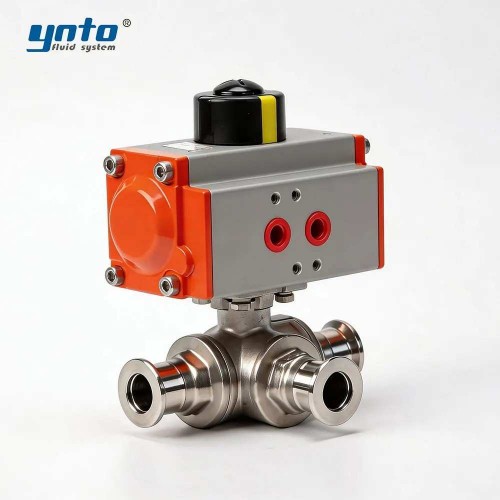
For mixed plants, many engineers solve the problem by standardizing around families of control valves and then selecting the actuation style accordingly. On cnynto’s side, that might mean pairing a pneumatic control valve for fast fail-safe action in a utility line, while using an electric actuator where precise modulating control and easy electrical integration are more important.
Best Practices for Implementation
Installation Tips
Most field problems that look like “bad regulation” are really installation problems wearing a valve mask. Clean instrument air matters. Clean hydraulic oil matters. Pressure range matching matters. AutomationDirect specifies its precision regulators for clean, accurate instrument air, while Bosch Rexroth ties hydraulic flow regulator performance to defined fluid cleanliness and DIN 51524 fluid requirements. If you install a precision valve into a dirty line, the valve will not become precise just because the datasheet says so.
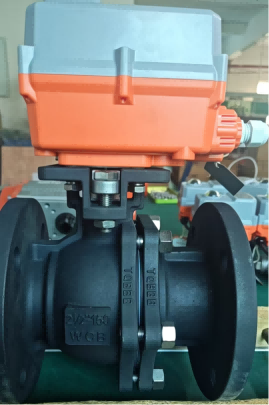
Material selection also belongs in installation planning, not as an afterthought. For clean gas and neutral fluid service, standard metals may be sufficient. For aggressive chemical duty, a diaphragm valve with PPH or PVDF body options and EPDM or FKM diaphragm materials gives a much safer margin against corrosion. cnynto’s diaphragm valve range also includes PTFE-lined and 316L sanitary variants, which is useful when the same plant has both corrosive chemical loops and hygienic utility loops. Where carbon steel is still the practical body choice, FBE can improve abrasion and corrosion resistance, while Solvay notes that Halar ECTFE coatings are used for long-term anti-corrosion protection in chemical processing environments.
Maintenance and Troubleshooting
During troubleshooting, engineers should start with symptoms, not assumptions. If the loop hunts around setpoint, check droop and sensitivity before blaming the controller. If the valve returns to a different setpoint depending on whether pressure was increased or decreased, that points toward hysteresis. If response slows over time, inspect the sensing element, trim friction, and media cleanliness. ControlAir’s guidance on sensitivity, repeatability, and hysteresis is especially useful here because those are the real signatures technicians see in the field.
For severe chemical or zero-fugitive-emission duty, buyers should also think beyond standard packings. A fluoropolymer-lined, bellows-sealed option can reduce leakage risk where plant safety rules are strict. In adjacent on/off isolation service, a properly sized electric ball valve can complement the regulating loop by delivering reliable shutoff, while smart diagnostics on newer valve controllers make it easier to catch wear before it becomes downtime.
Conclusion: The Future of Flow Control
Innovations in Precision Regulation
Precision regulation is moving in two directions at once. One path is mechanical refinement: better sensing elements, lower hysteresis, improved pilot stages, better trim geometry. The other is digital intelligence. Emerson’s newer digital valve controllers are designed to deliver local analysis, digital communication, and maintenance information that helps personnel act before a problem becomes a shutdown. SAMSON describes the broader industry shift clearly: control valves are evolving from analog components into smart control valves aligned with Industry 4.0.
Upcoming Trends for 2025
The trends buyers focused on in 2025 are still shaping specifications now. Smart diagnostics, predictive maintenance, lower-energy actuation, and tighter integration with plant networks have moved from “nice to have” to shortlist requirements. Festo’s piezo technology is one good example: very precise pressure and flow control with low power consumption, quiet operation, and fast response. That is why procurement teams increasingly compare not only Cv and pressure rating, but also data capability, response repeatability, and lifecycle serviceability before choosing a final control package.
If your system still relies on a broad-range general regulator that was “good enough” years ago, this is usually where efficiency is being lost. Upgrading to the right precision regulating valve, and matching it with the right body style, actuator, material set, and testing standard, is often one of the cleanest ways to improve stability without rebuilding the entire skid. ANSI/ASME B16.34 governs pressure-temperature ratings, materials, markings, and testing for many industrial valves; ISO 5208 defines pressure-boundary and closure-tightness testing; API 598 covers inspection and pressure testing across common valve types; and DIN-linked hydraulic specifications remain critical where oil cleanliness and fluid selection affect regulator behavior directly. Those standards are not paperwork. They are what separate a stable loop from a troublesome one.
.png?imageMogr2/format/webp)
- 2026-09-30 08:25:23
- 2026-09-28 10:28:43
- 2026-09-21 15:23:44